We took a trip with Road Scholar to explore Croatia by sea. Croatia is on the Adriatic Sea, east of Italy. Our guide, Darko, is a native Croat who lived through their war against Serbia in 1990-1995. The tour was mostly by boat, on a small ship the Barbara that sleeps about 30 including the crew.
We recorded a short 2-3 minute travel vlog each day. You can see the playlist here. Don't miss the waterfall video in the appendix.
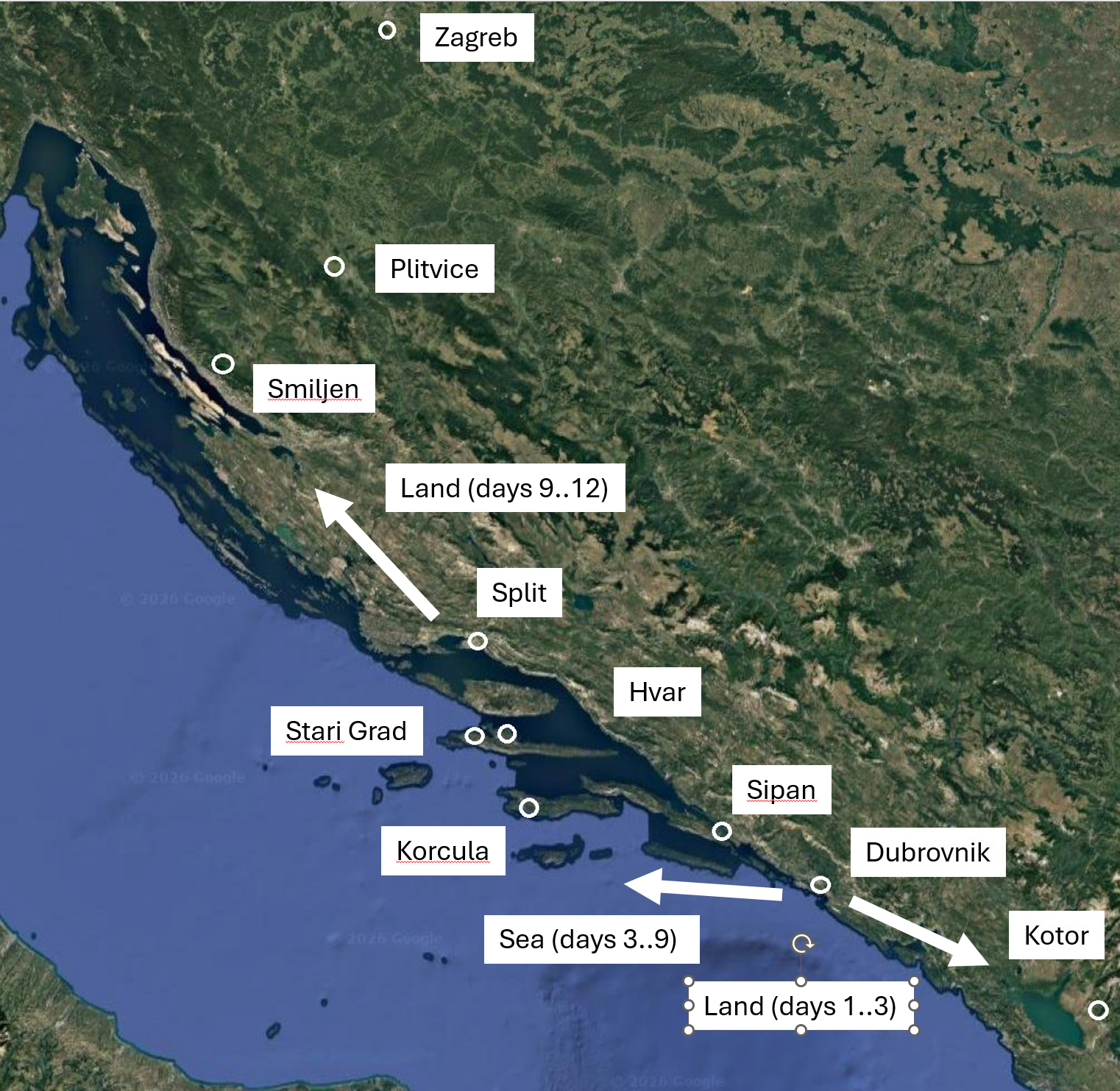
This shows our travel plan. Croatia is east of Italy on the Adriatic Sea. We flew into Dubrovnik, and went southeast to Montenegro by bus; then we returned to Dubrovnik, had a city tour, and boarded the Barbara for about a week to cruise a number of islands. Finally we returned to land, and toured the last several stops by bus and flew out from Zagreb, the capitol city.
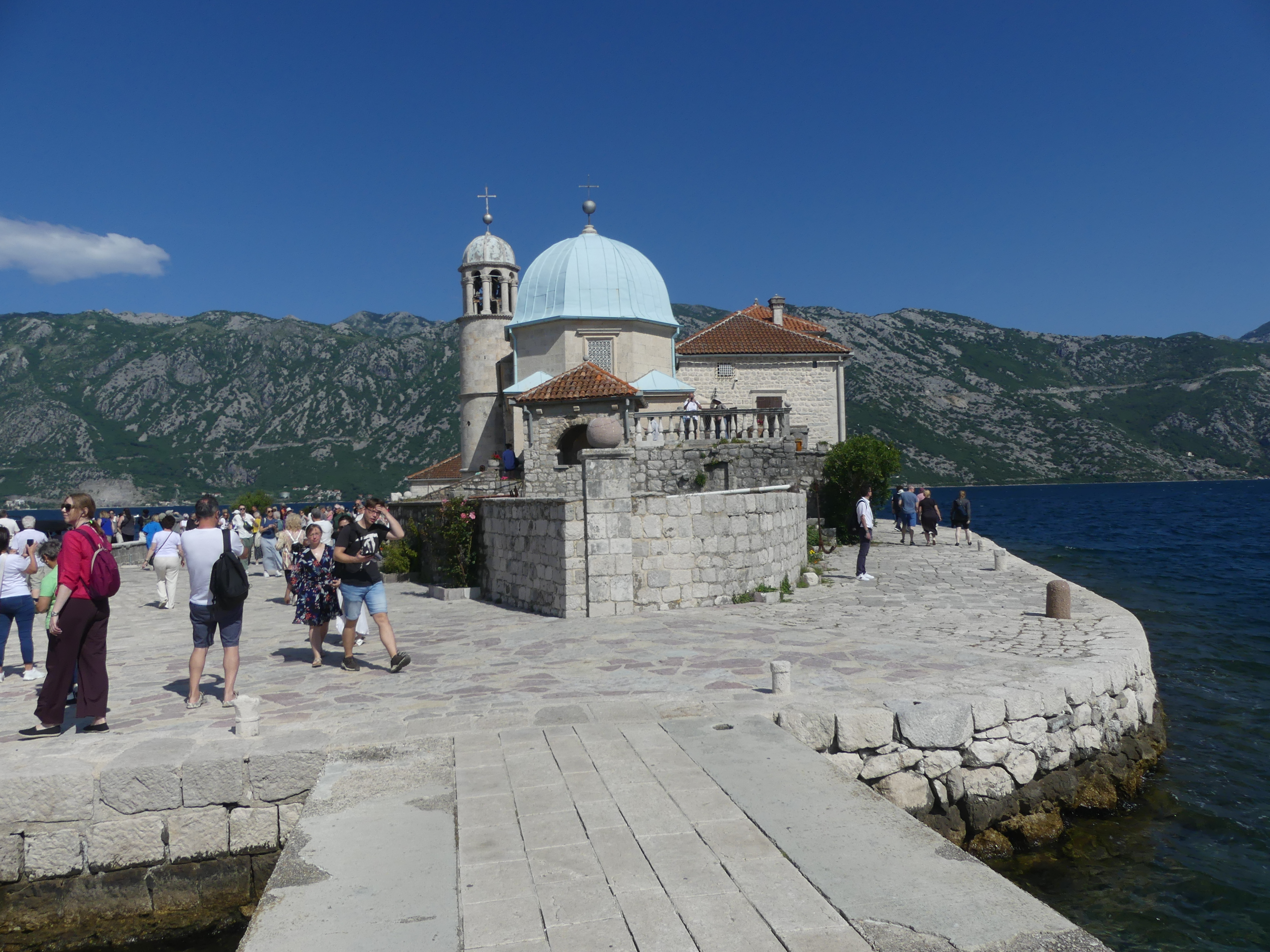
After a time-consuming border crossing to Montenegro due to new EU regulations, we visited Our Lady of the Rocks, a small church on a small island in Kotor. The island was built stone by stone after local sailors found an icon of the Virgin Mary on a rock in 1452.
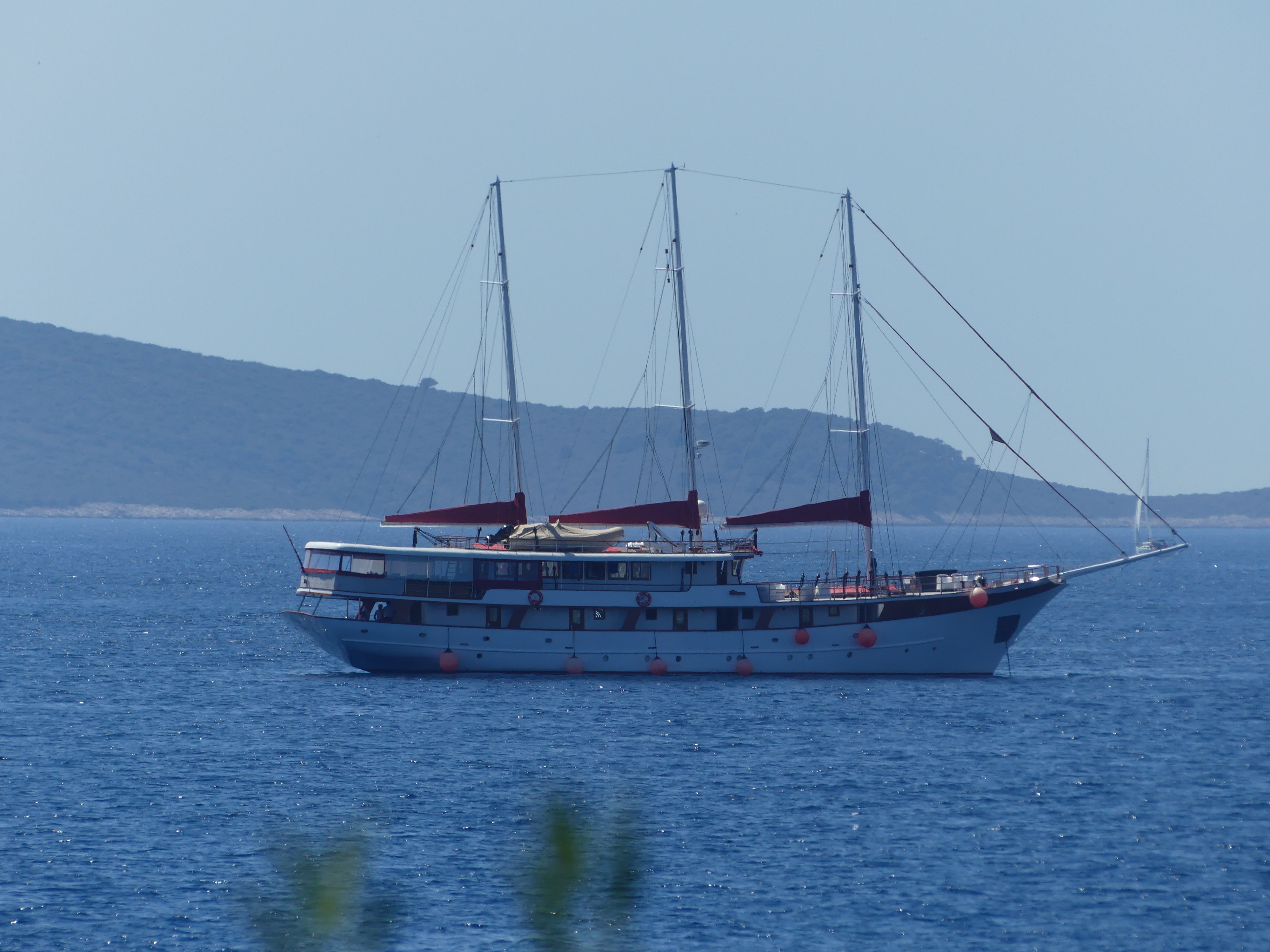
We boarded the Barbara, a small ship which would be our home for most of the tour. We voyaged only during the day, and mostly inland of the Adriatic Sea, so there was very little turbulence. Although they suggested they might try a short journey under sail, there wasn't an opportunity, so all the sails remained furled during our trip.
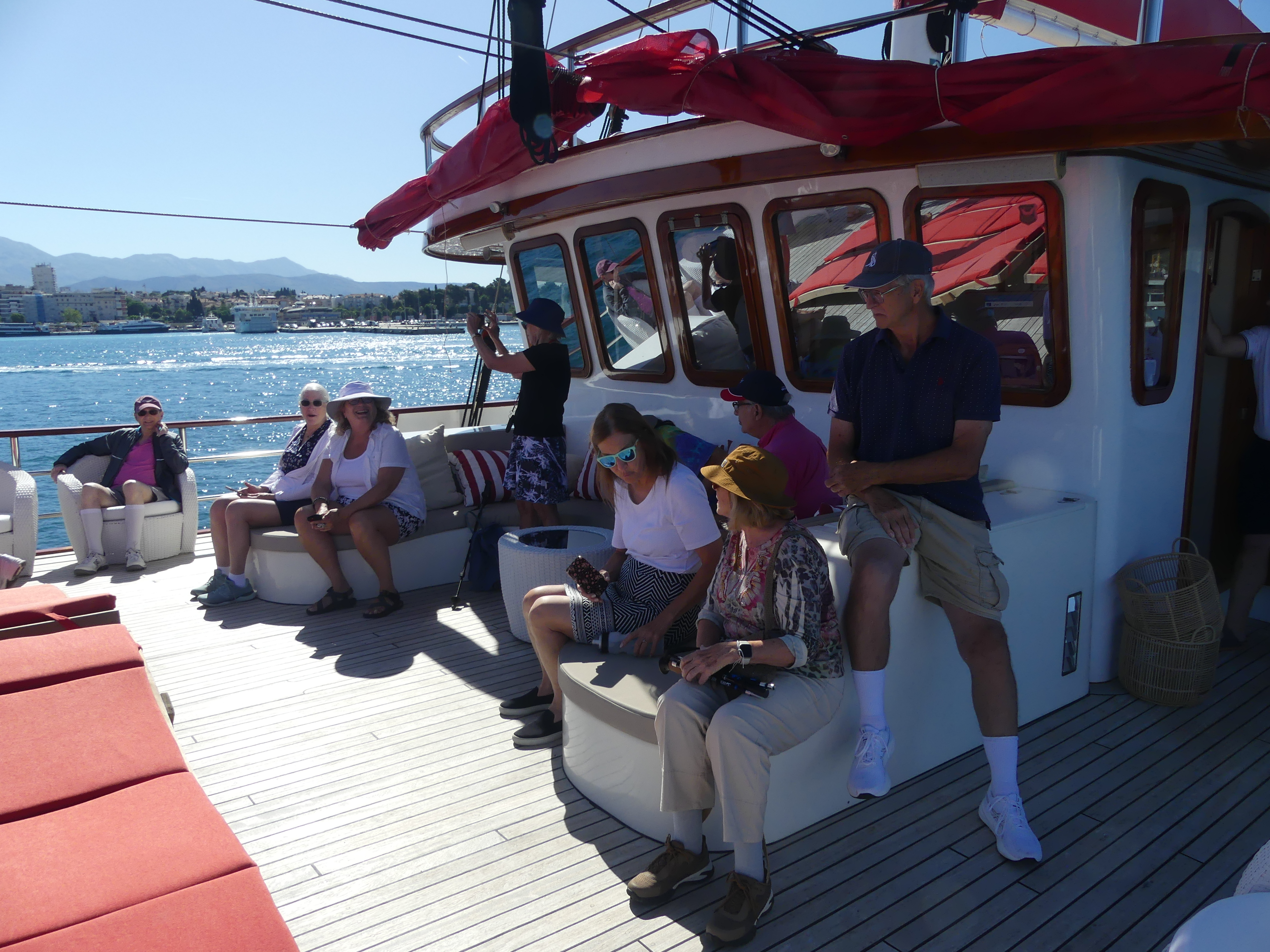
On our other Road Scholar tours, most people returned to their hotel rooms during the evening. Here, because the cabins were quite small, most people "hung out" either on the upper deck here, or on a large lounge mattress area in the back of the main level. We spent more time socializing with the other members of our group and got to interact more with everybody.
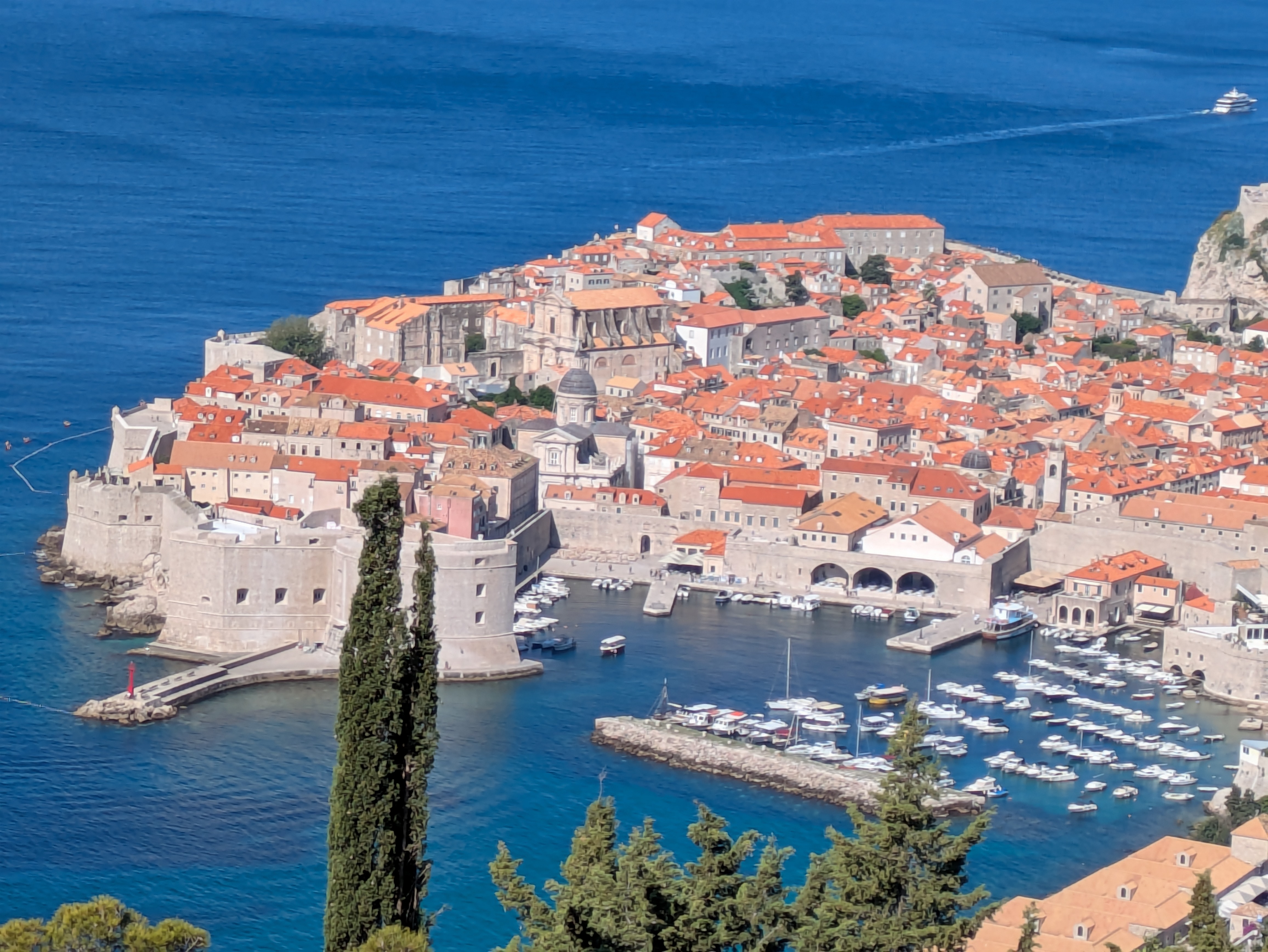
A view from an overlook onto the famous medieval city of Dubrovnik, or Ragusa as it was known then. Dubrovnik is famous for a few different things. It was a powerful independent city during the Venetian era, where they balanced the rival interests of Venice and the Ottoman empire. Many scenes of Game Of Thrones were filmed here, and we saw the most infamous one, the "walk of shame" staircase. Sadly Jen did not agree to strip naked and walk down it while Dave threw rotten fruit :-).
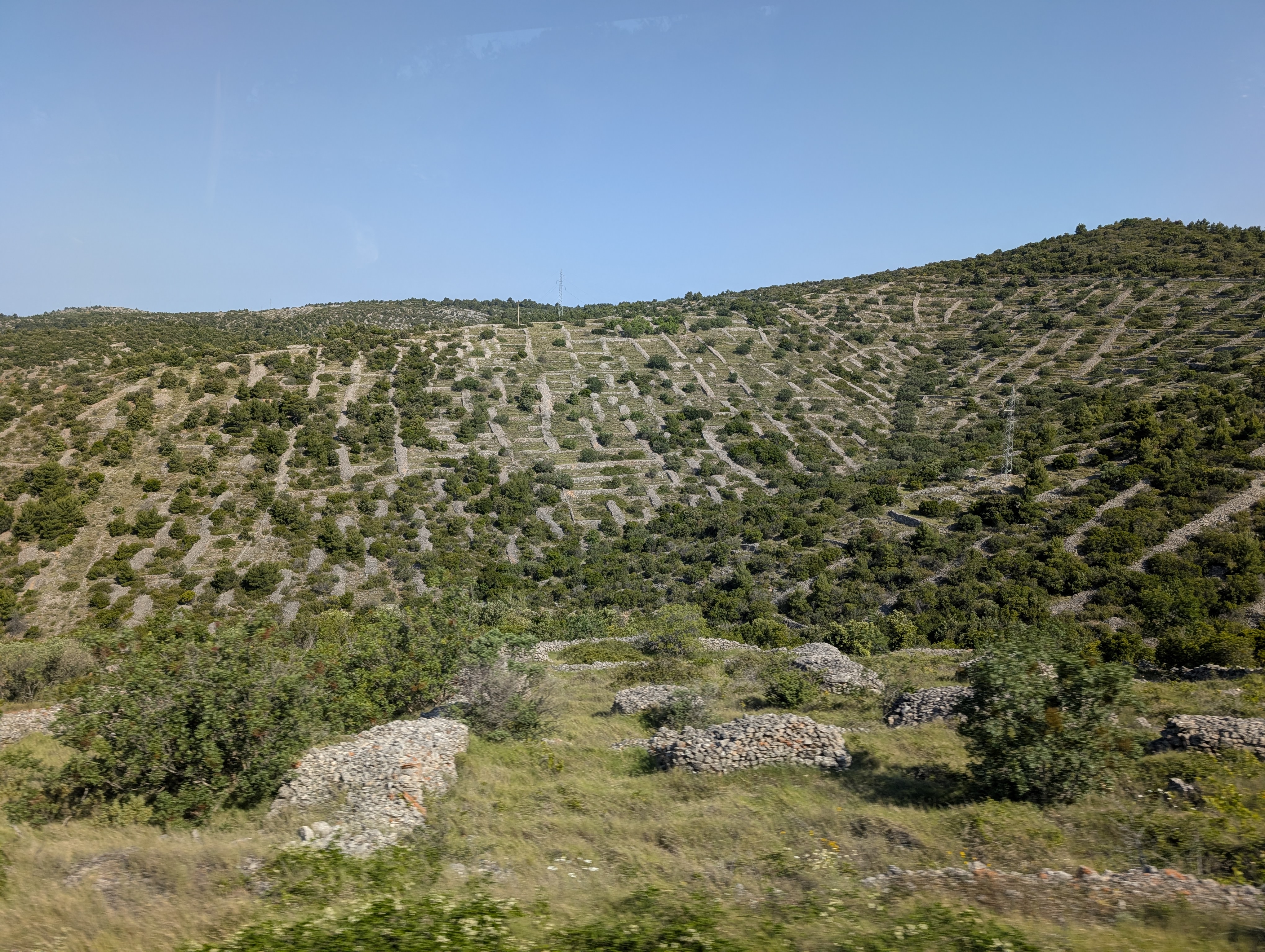
In order to farm most of the land, the farmers needed to dig so many rocks out of the soil that they became experts in dry stone wall construction (no mortar). A lot of the countryside we passed was covered with patterns of these walls.
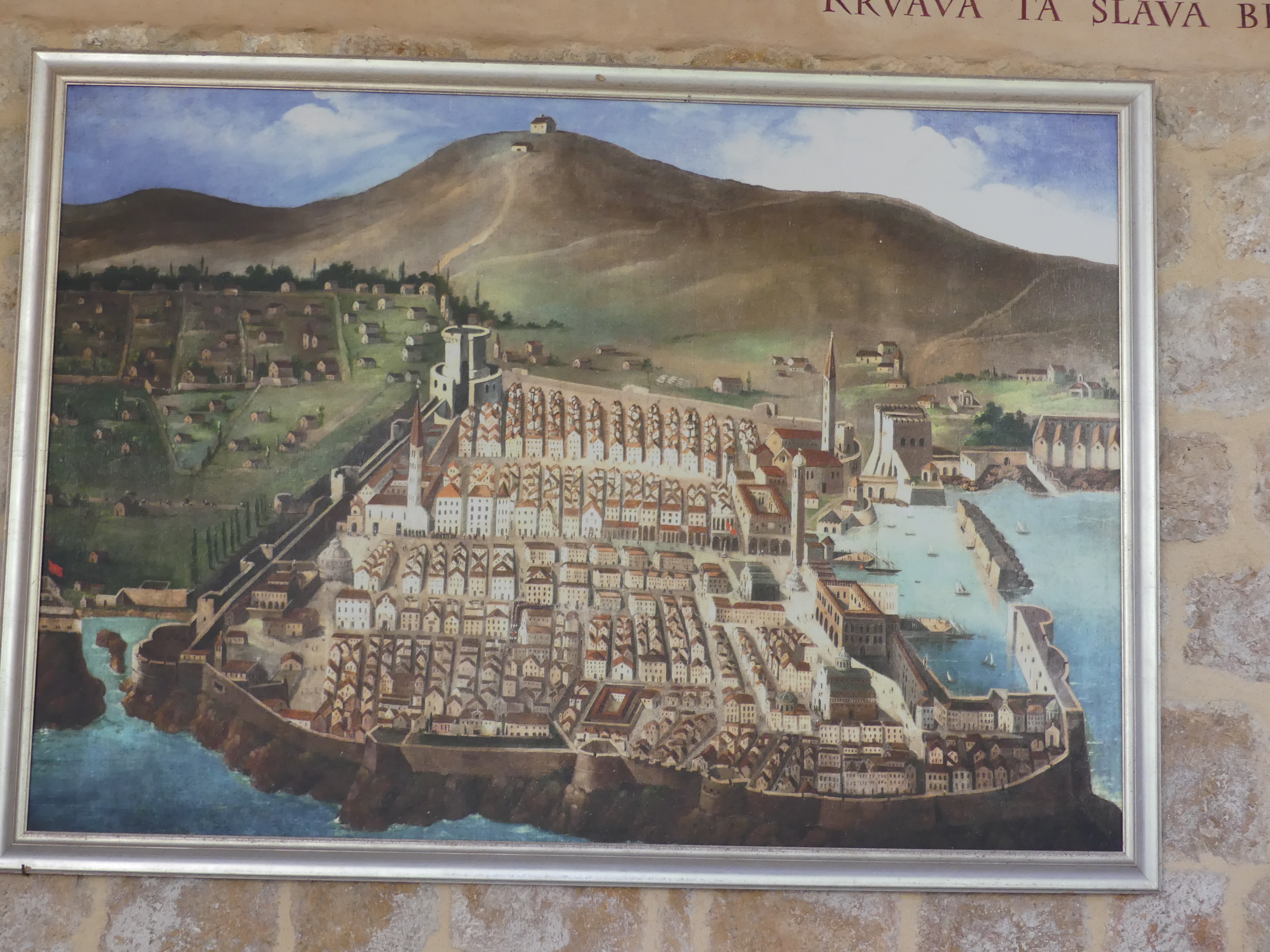
We toured a few small cities. This one, Sipan, is built around one central street left to right. The cross streets above the main street are all straight, because a cooling summer wind blows from there. The cross streets below the main street are all curved, because a cold winter wind blows from there. It was hot the day we were there, so we appreciated the natural air conditioning.
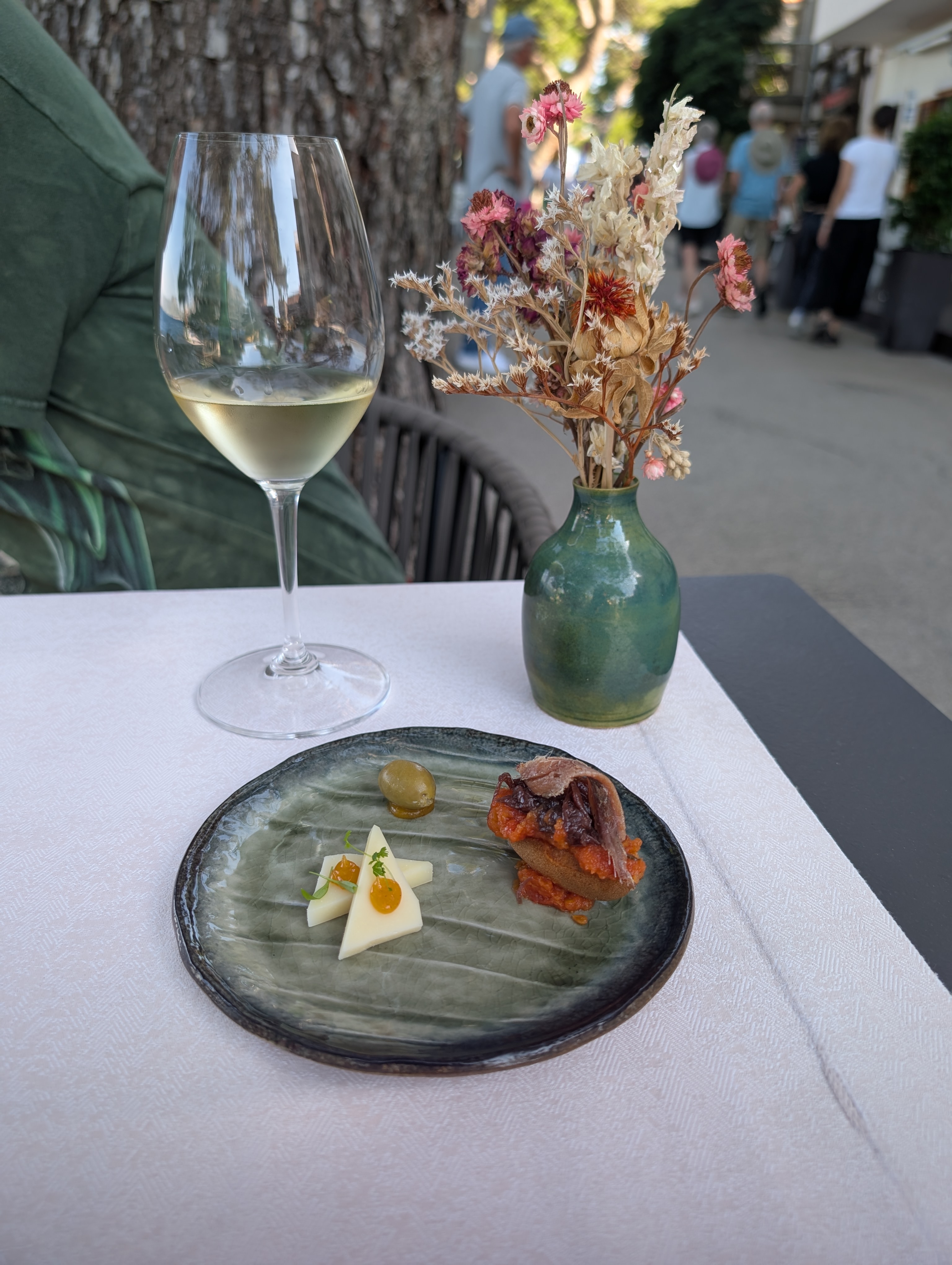
In some free time on Korcula, we found a nice location that was doing wine tasting with little snacks. Very refreshing. Dave didn't lean quite far enough out of the way, behind in green.
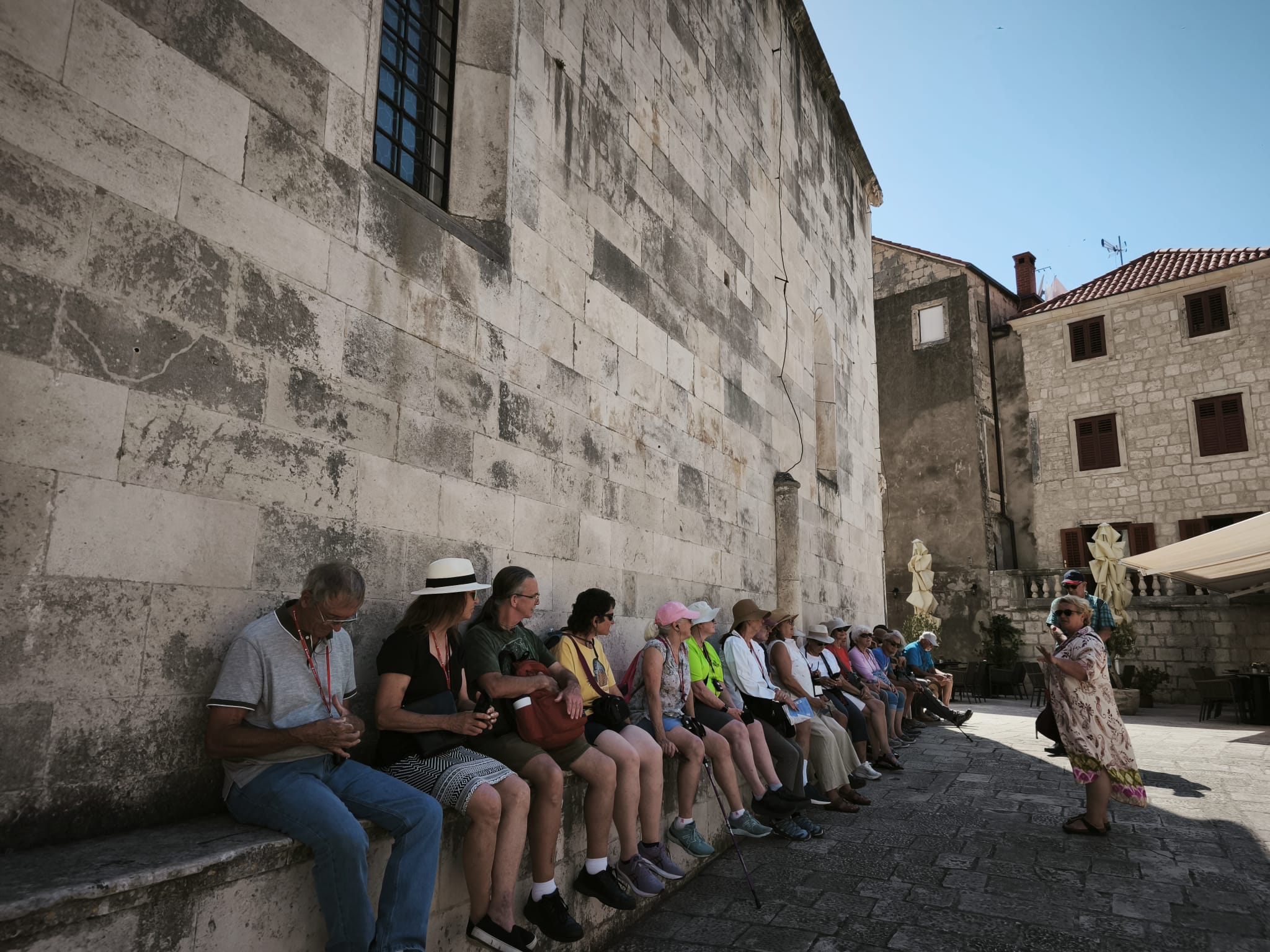
On the hot days, the guides were very considerate and only gave their descriptions when the group could fit into some pocket of shade.
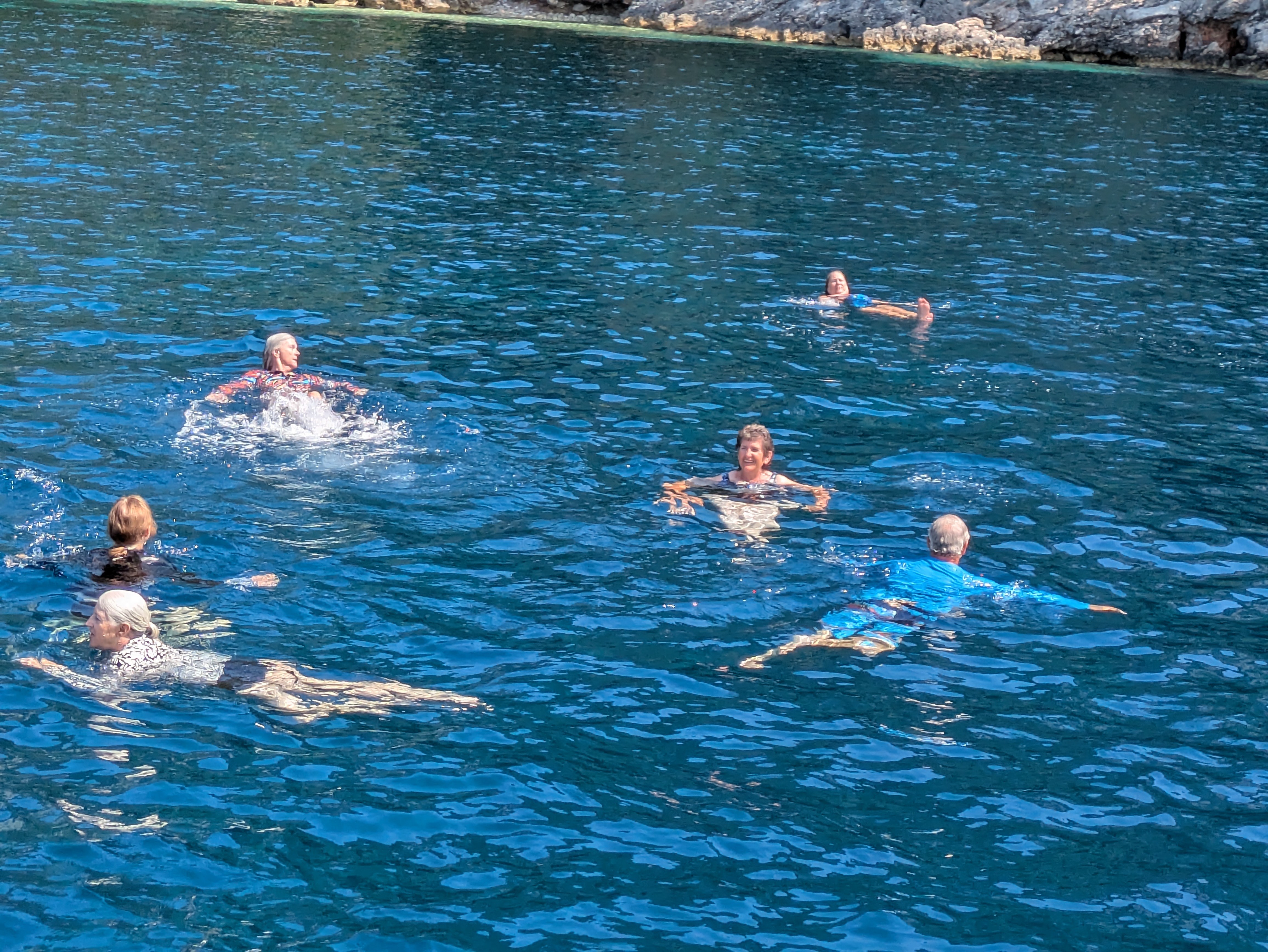
Proof that Jen went swimming in the Adriatic! Twice the boat stopped and anchored for a while. There was a ramp and ladder at the back of the boat so you could climb in, and a freshwater shower to get the salt off afterwards. Jen reported that the water was very cold ...
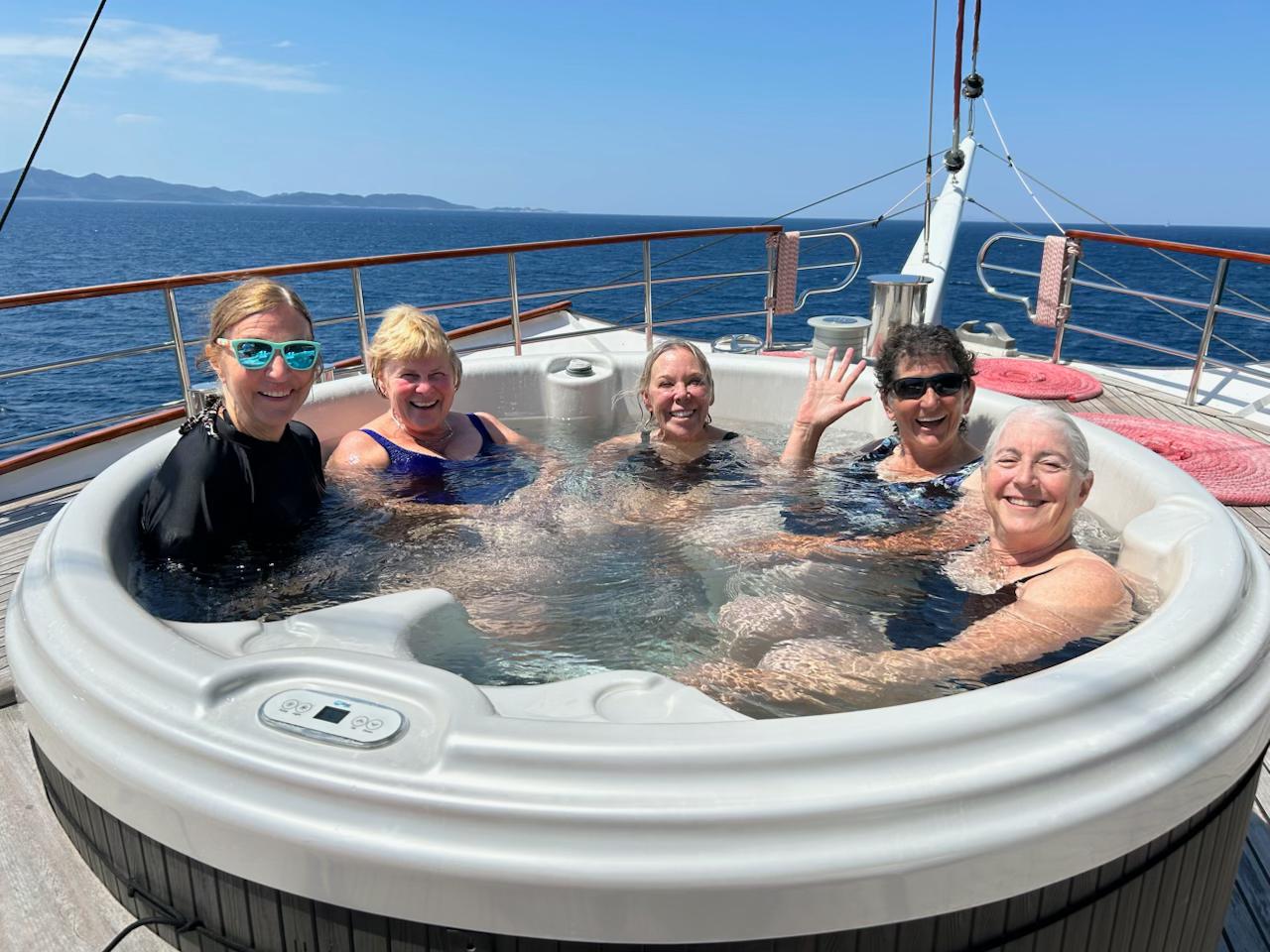
... so the immediate next step was to get into the hot tub on the top deck!
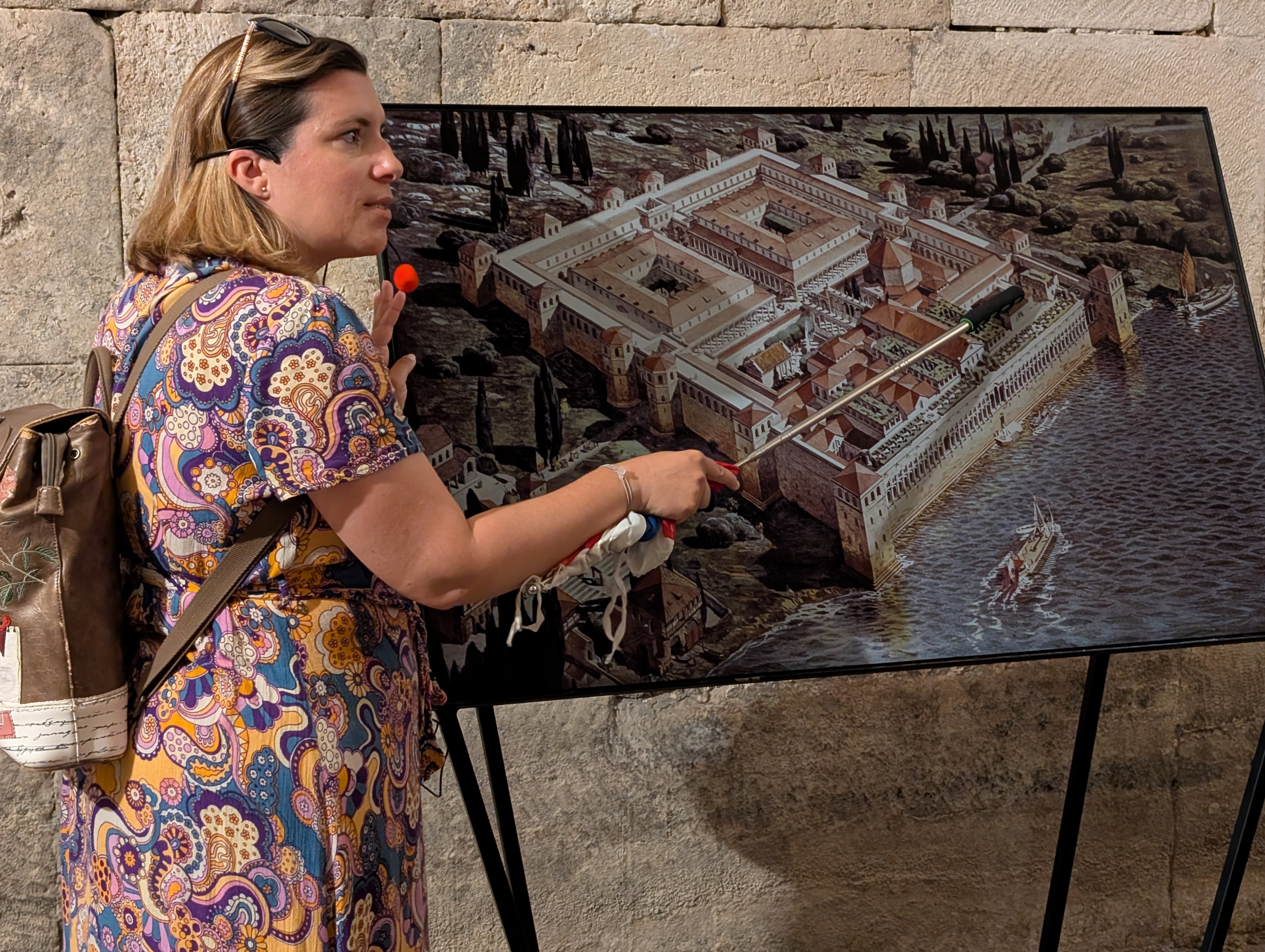
The city of Split, on the mainland, is built around Diocletian's Palace. He was one of the few Roman Emperors who retired (rather than getting assassinated or dying in office), so he built this palace around 300 AD. It's really the size of a small town. Now the modern town surrounds it, but we spent a while exploring both the lower level (food storage) and the upper level (living areas).
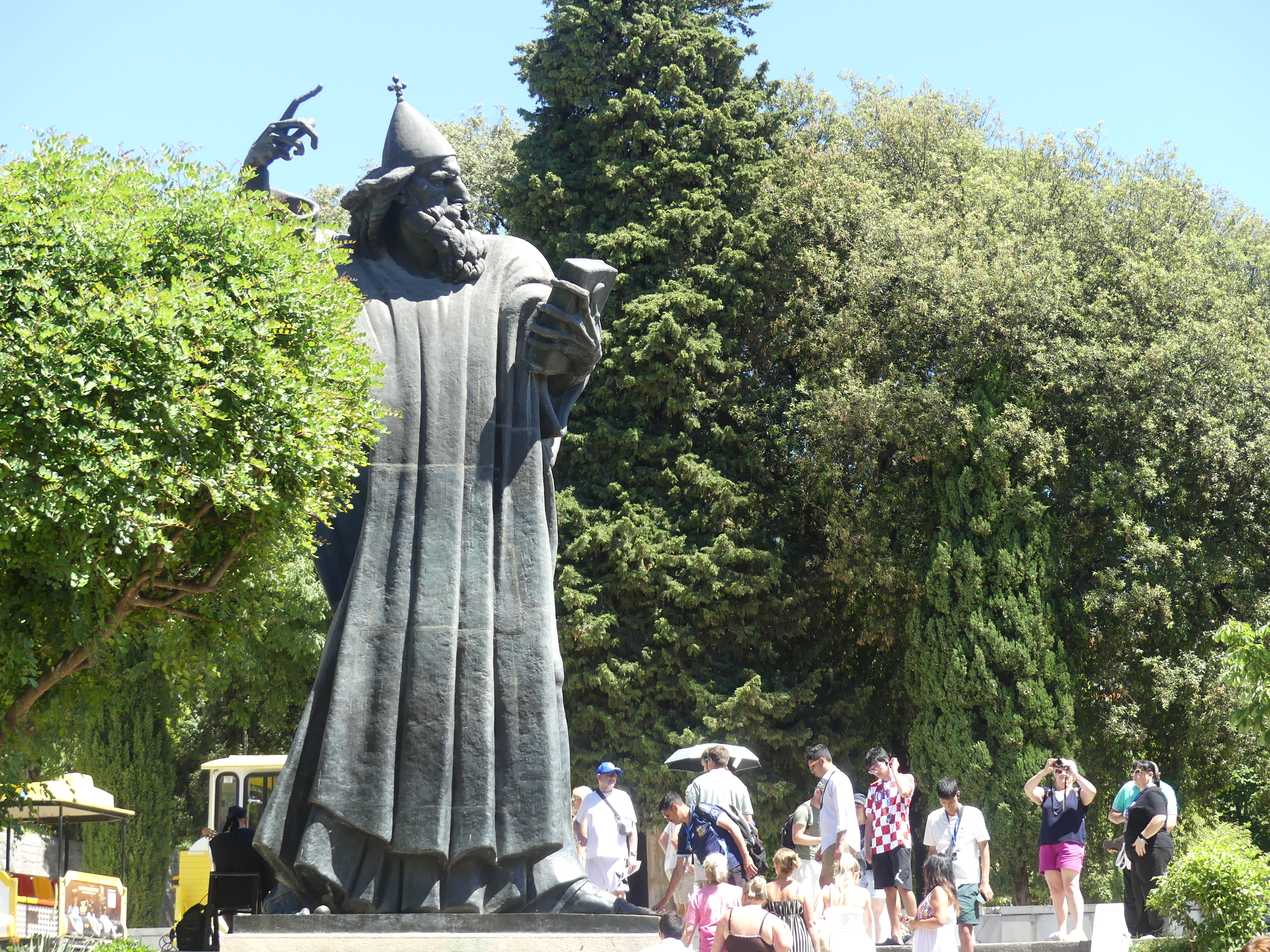
Also in Split is the huge statue of Gregory, by the famous sculptor Ivan Mestrovic. Apparently rubbing his toe is good luck.
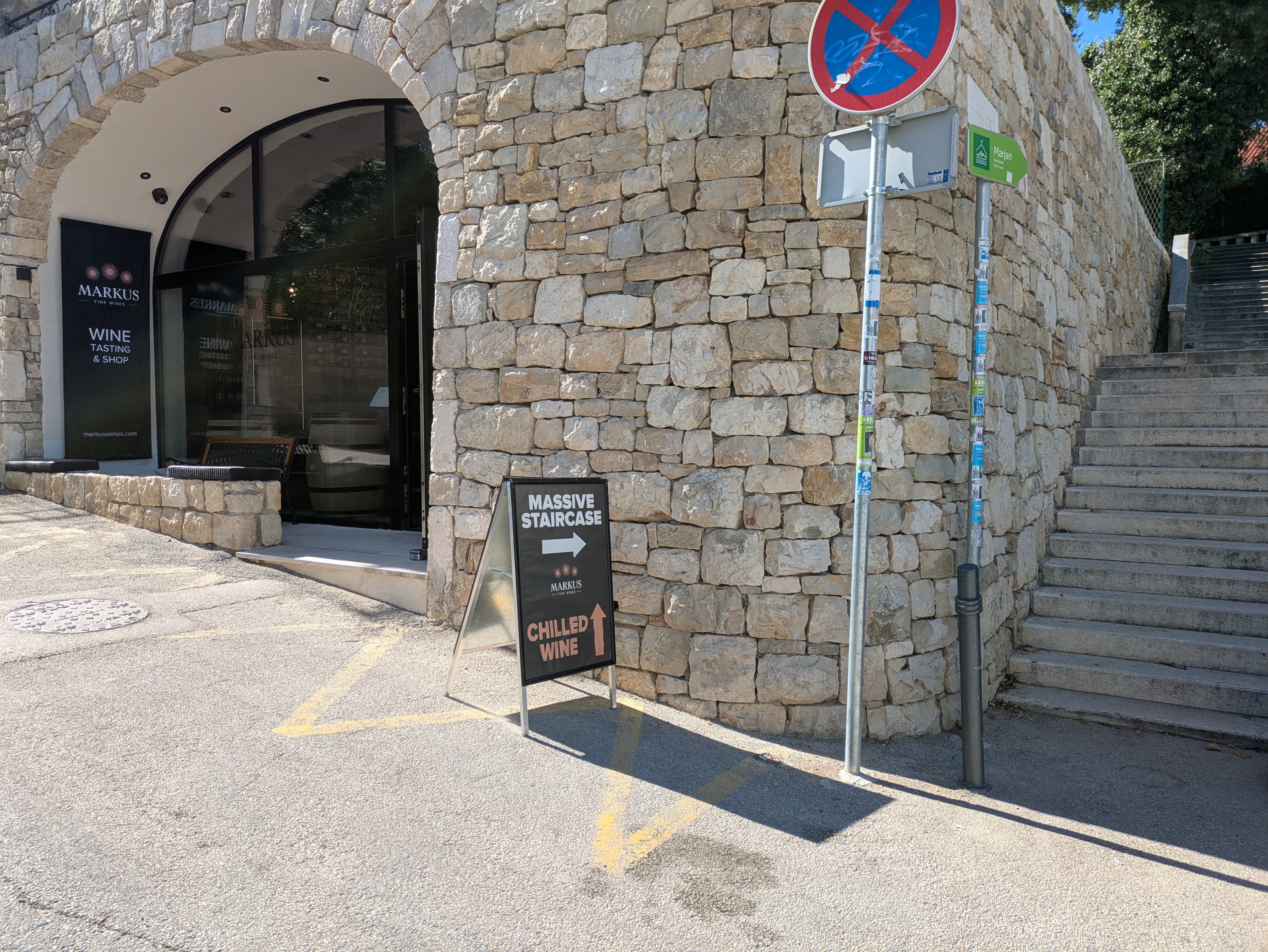
Our guide told us about a scenic overlook at the top of a very long set of stairs. Dave went to check it out, but he almost got lost when he found this helpful directional sign. Very clever marketing!
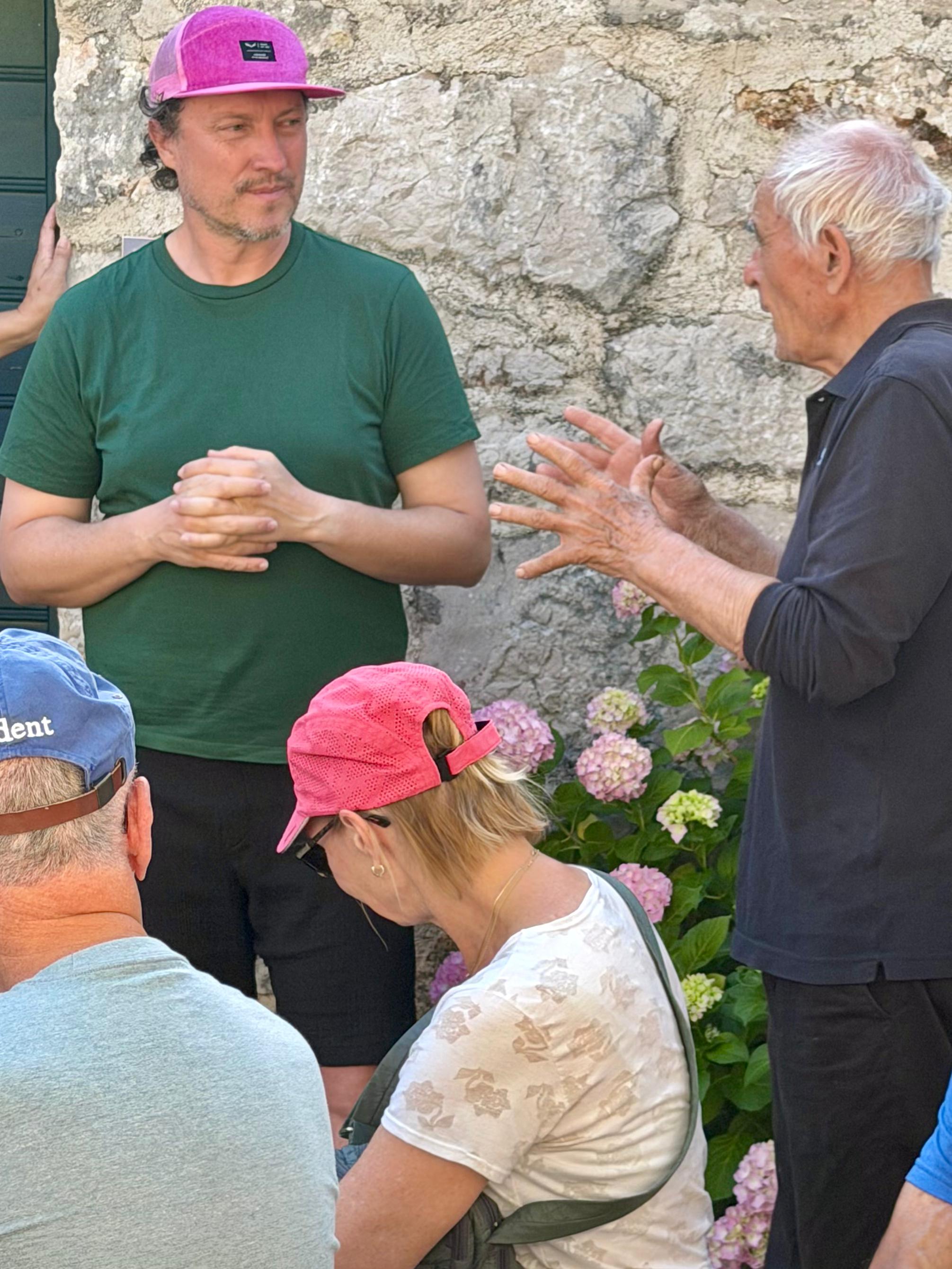
After leaving Split, we went to a tiny mountain town which had been attacked by the Nazis in World War II. The older gentleman on the right was a small child when most of his older male relatives were killed. He is describing in Croatian language, and our guide Darko is translating. They are participating in a program to help these towns survive by creating museums and self-guided tours.
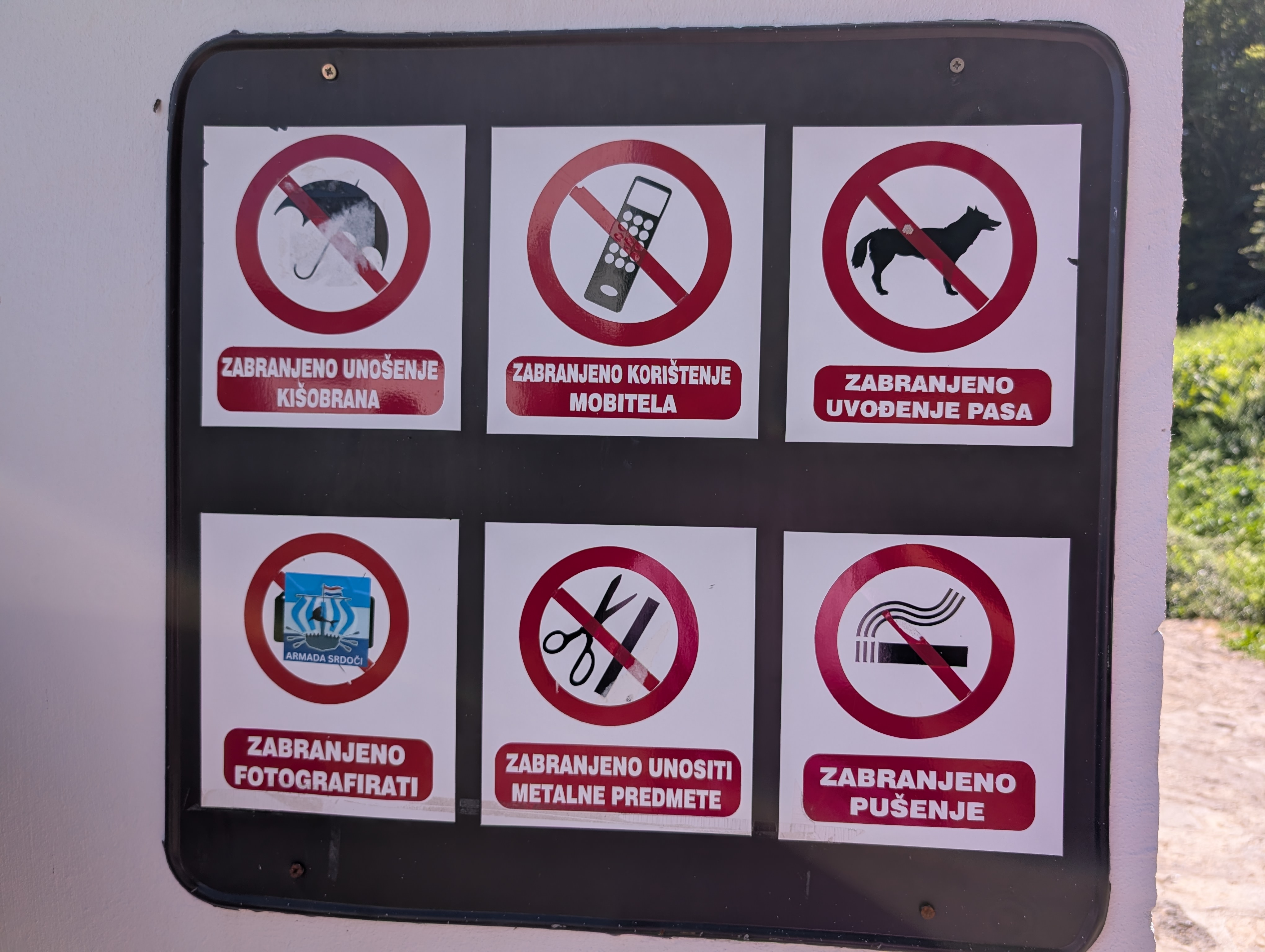
To break up a long bus trip, we stopped for a few hours in Smiljen, which is the small town where Nicolai Tesla was born and grew up. Of course there is a museum and a gift shop. On the side of the gift shop there are some warning signs. We did not quite get the one at bottom center: "no haircutting" ? The guide could not explain. The museum had a lot of the contraptions that Tesla invented, still generating huge static sparks.
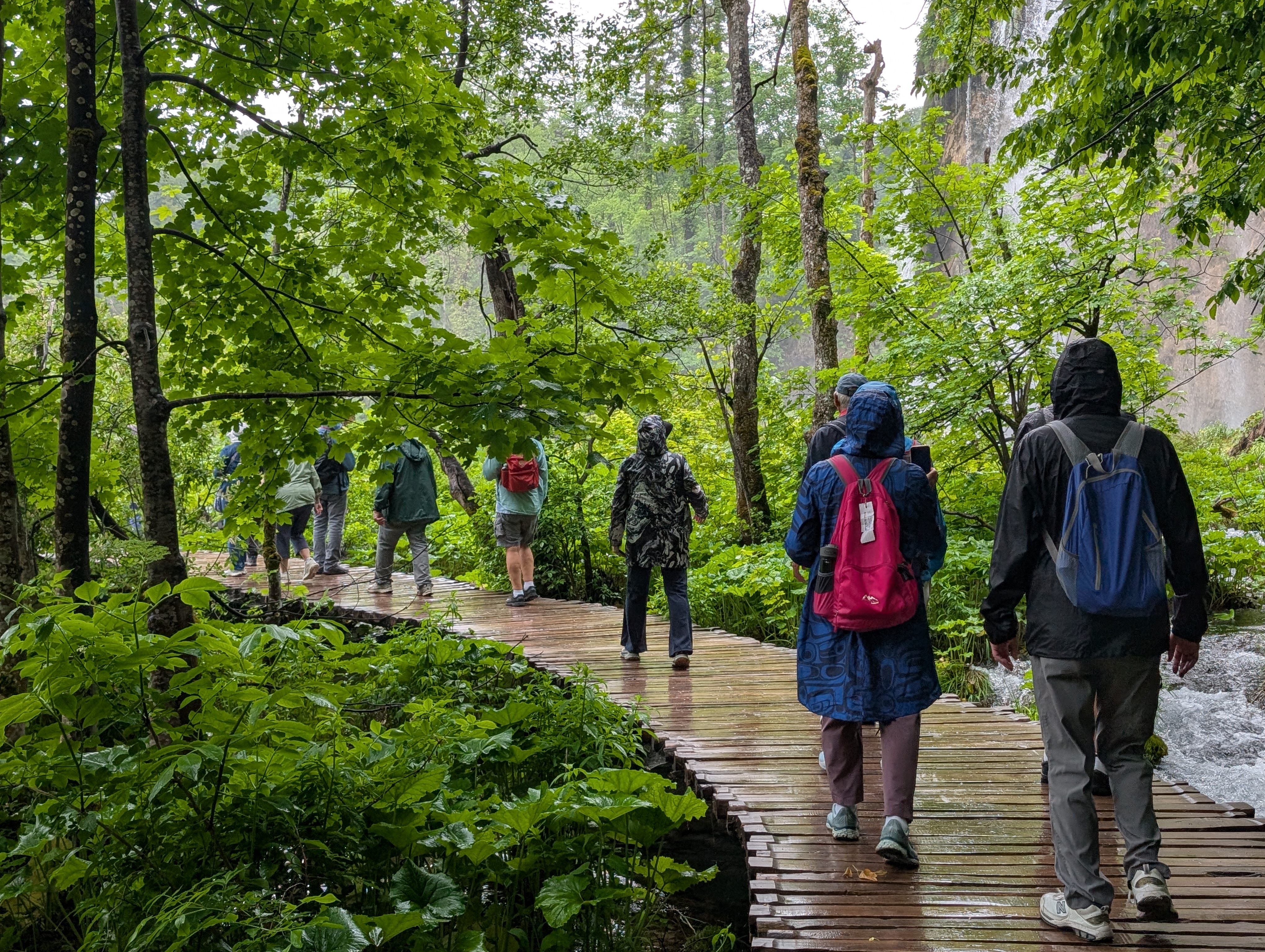
Our favorite stop on the trip was Plitvice National Park, which has a number of terraced lakes and hundreds of waterfalls of different sizes. Our guide took us along these wooden walkways, and many times we crossed over a small rushing stream in between the lakes. We spent almost the whole day walking along these, with some short boat trips to get to different areas. It was raining a little sometimes, but that just added a little more water to what was already there.
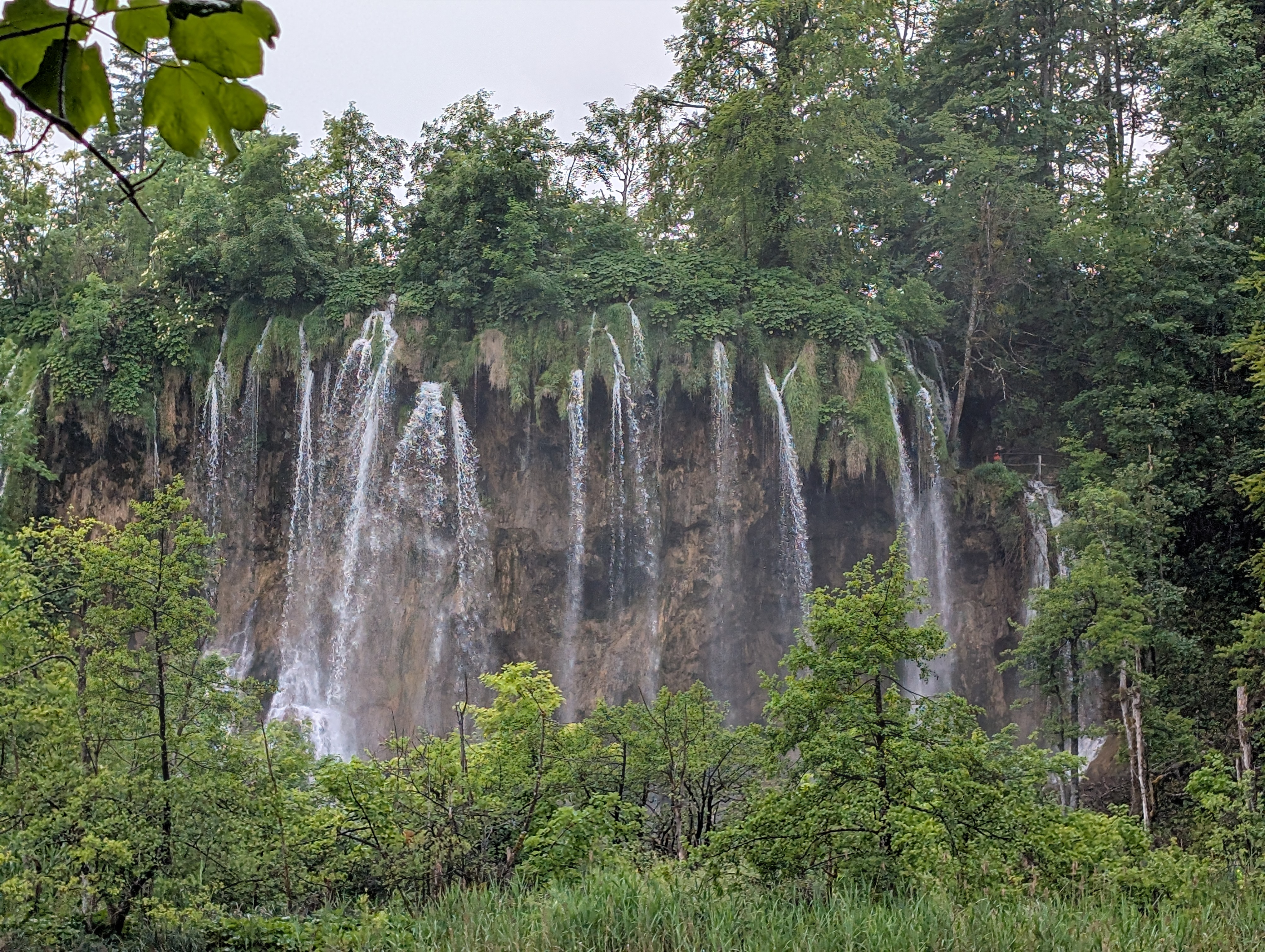
One of the waterfalls. You can call it "one" waterfall, or a dozen. The lakes form terraces due to barriers of "tufa" which are a cool water equivalent of travertine, which is common in Yellowstone. It's very porous, so the lake above pours through many holes in the tufa.
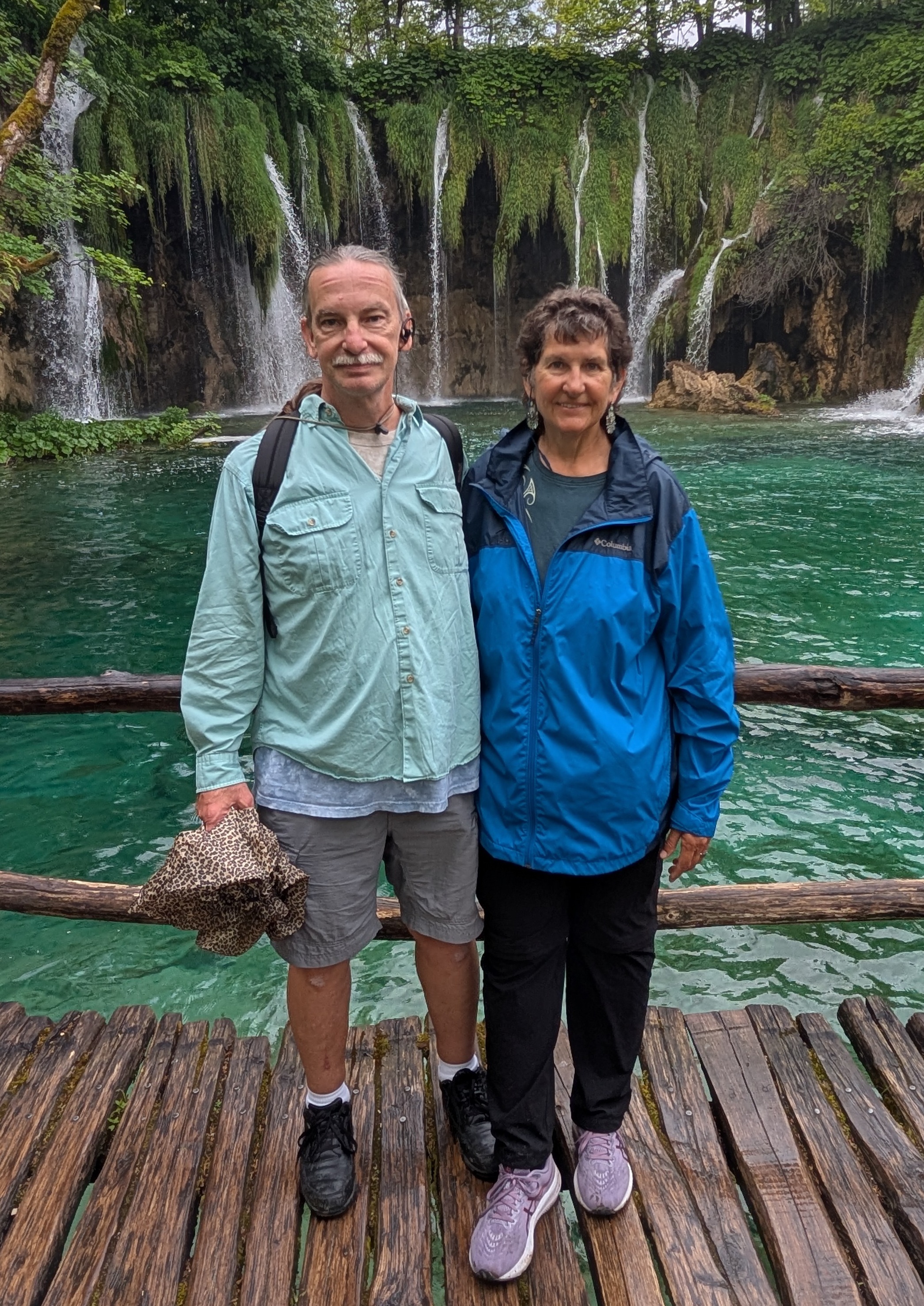
An obligatory picture proving we were there. Dave has a bad case of "hat hair" on his forehead, apparently. (NOTE TO SELF: photoshop Dave's forehead)
| 
|
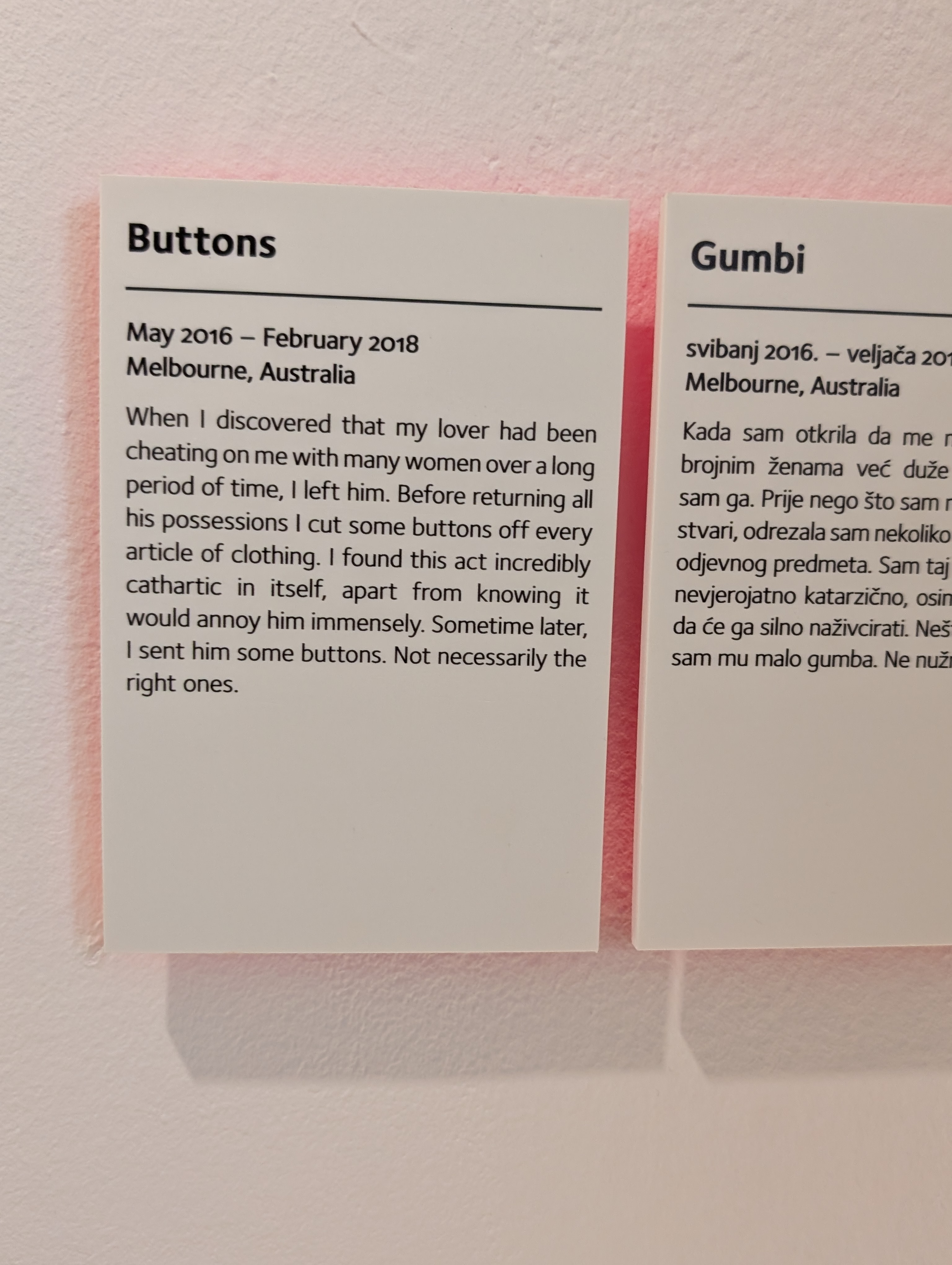
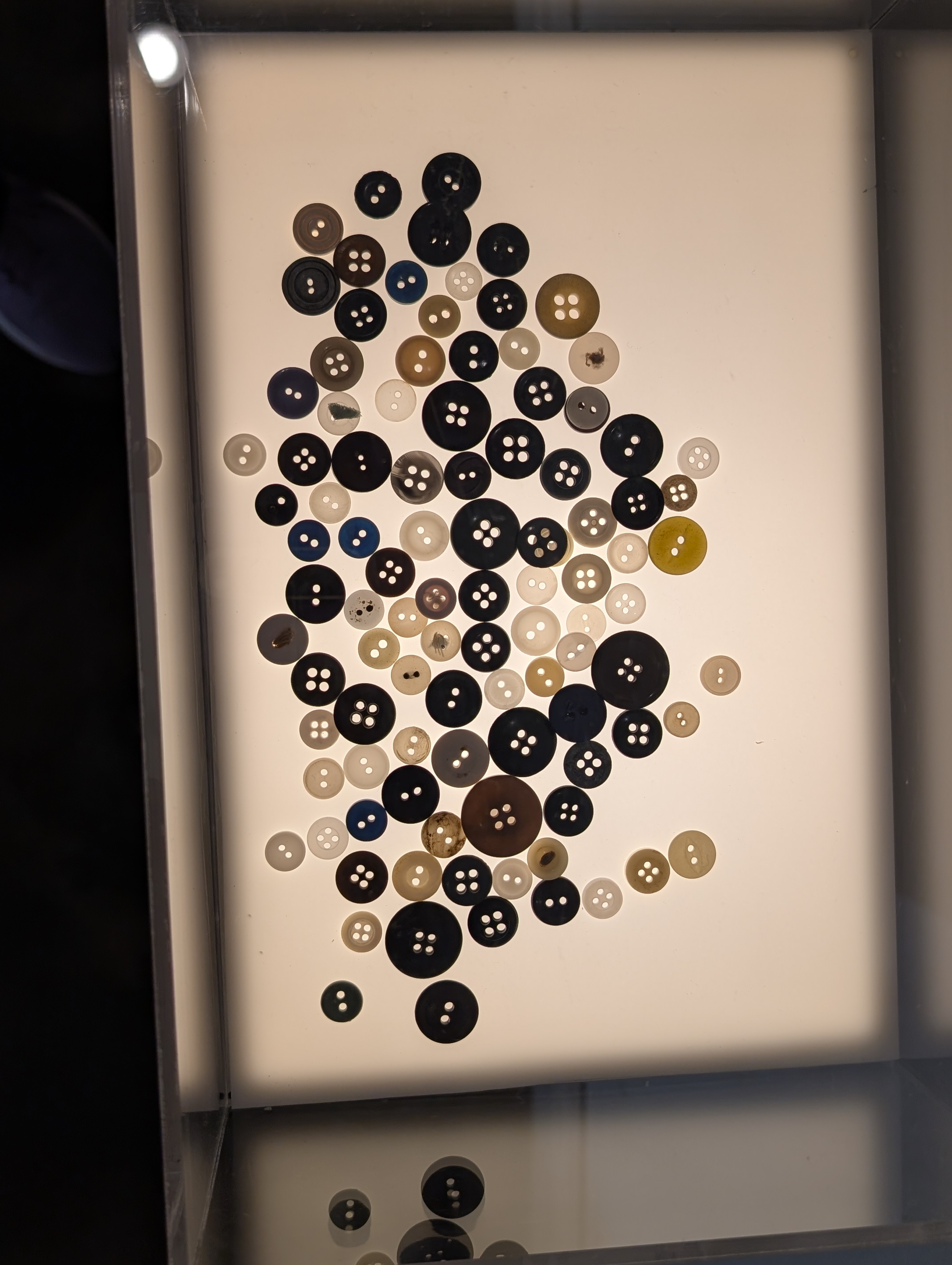
The last city on our tour was Zagreb, the capitol. It was kind of a standard medium size European city, but our guide recommended one unique stop, the "Museum of Broken Relationships". It's probably the only time I read every word of every informational panel. Each display is donated by a person who had a bad breakup. They are donating to get rid of the item, which reminds them of the breakup, and the panel tells their story. Some of them are funny, some are sad, but we particularly liked this one. The item was a small box of buttons.
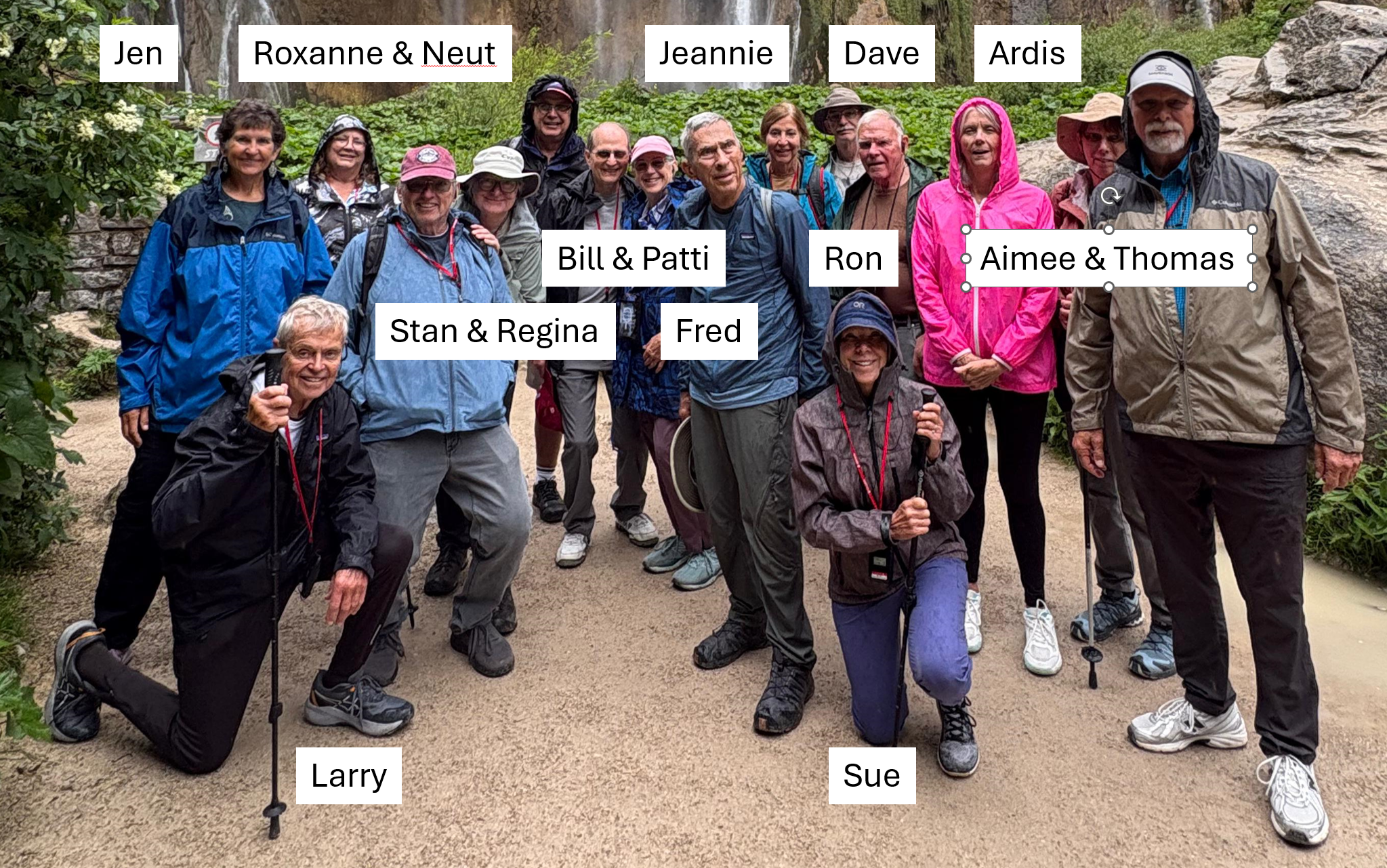
At Plitvice, our local guide took a photograph of the group standing near the tallest waterfall. I added the names so we remember who was who.
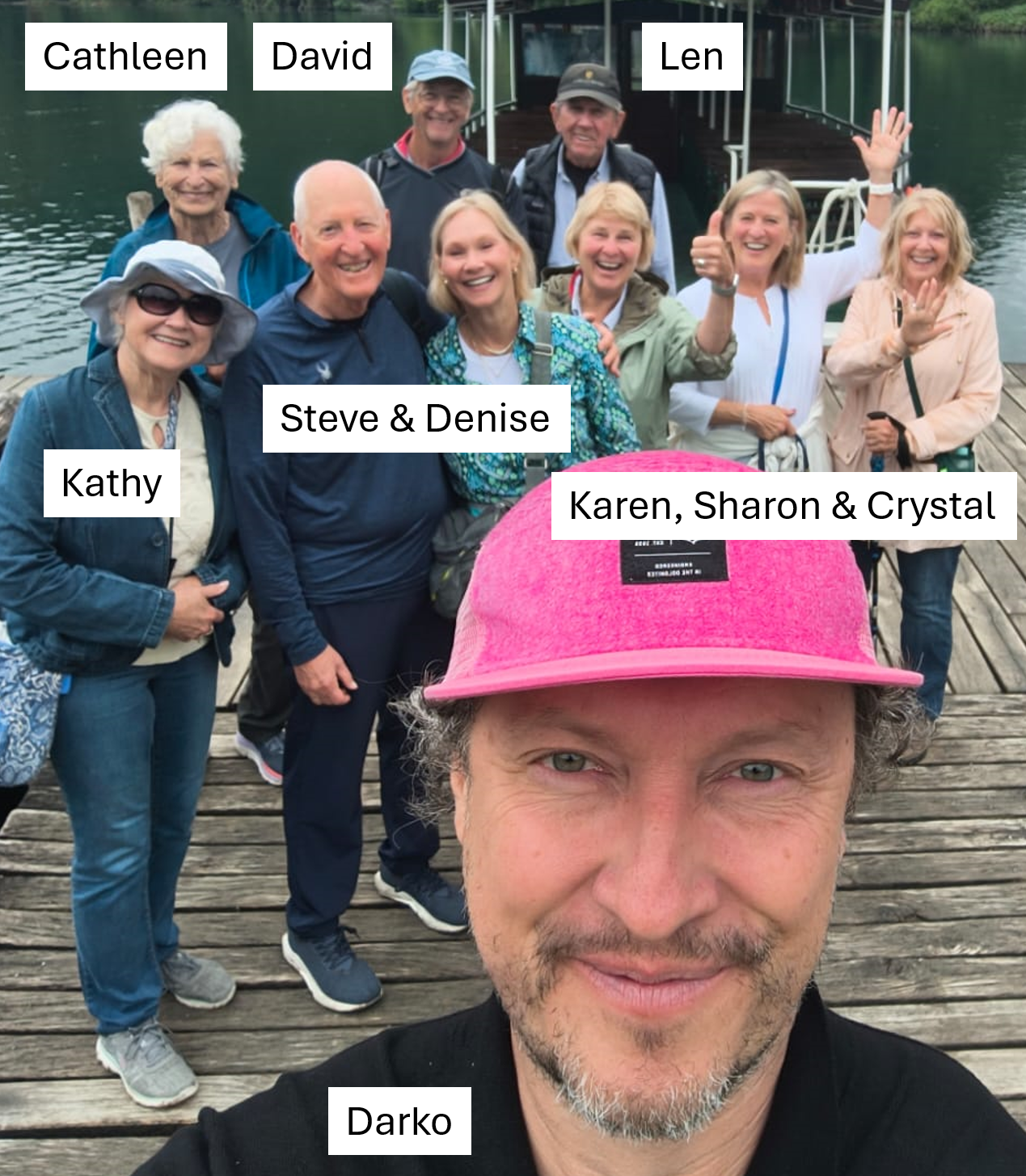
Not everybody was up to the full day of walking. Our tour guide Darko took this picture of the people who didn't make it to the waterfall, so everybody would be represented.